
FDM material · Applications · Alternatives
ABS 3D printing: technical parts for indoor use
ABS is an engineering plastic worth considering for tough functional parts and applications involving more heat. Rather than merely checking shape, the focus is on repeated handling, mechanical demands and the surrounding environment. The task often involves a regularly used part that must fit an existing device. These examples show which information can support a material decision based on the intended application.
Possible application 1
Replace a mechanical rotary knob
A discontinued rotary knob could be recreated from a sample. For an ABS version, its shaft interface, fastening and available space would be considered. An initial prototype could reveal whether the knob is comfortable to grip and the device remains practical to operate in the intended sequence.
Possible application 2
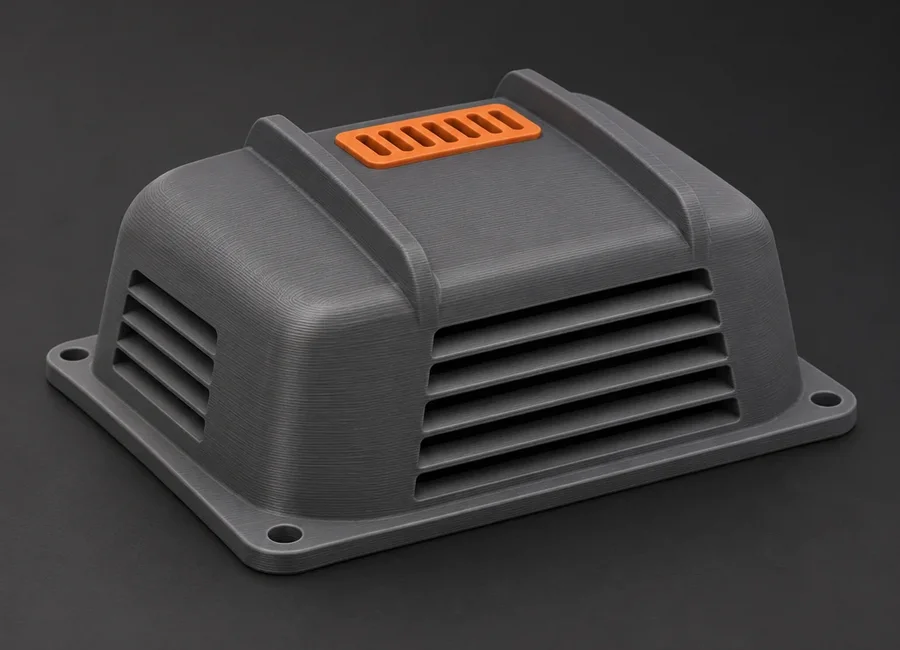
Adapt a device cover to existing equipment
A cover could accommodate existing connection or mounting areas on a device. Cutouts, accessible screws and clearance from moving components would need to be defined. ABS could enter the material review when indoor handling and minor impacts matter more than simply showing the model’s appearance.
Compare the function
ABS or ASA for the same bracket?
ABS can be an appropriate comparison option when the bracket stays indoors. If it is regularly taken outside or remains in sunlight, ASA deserves more attention because of its better UV resistance. The mechanical task may stay the same while a changed environment shifts the criteria for material selection.
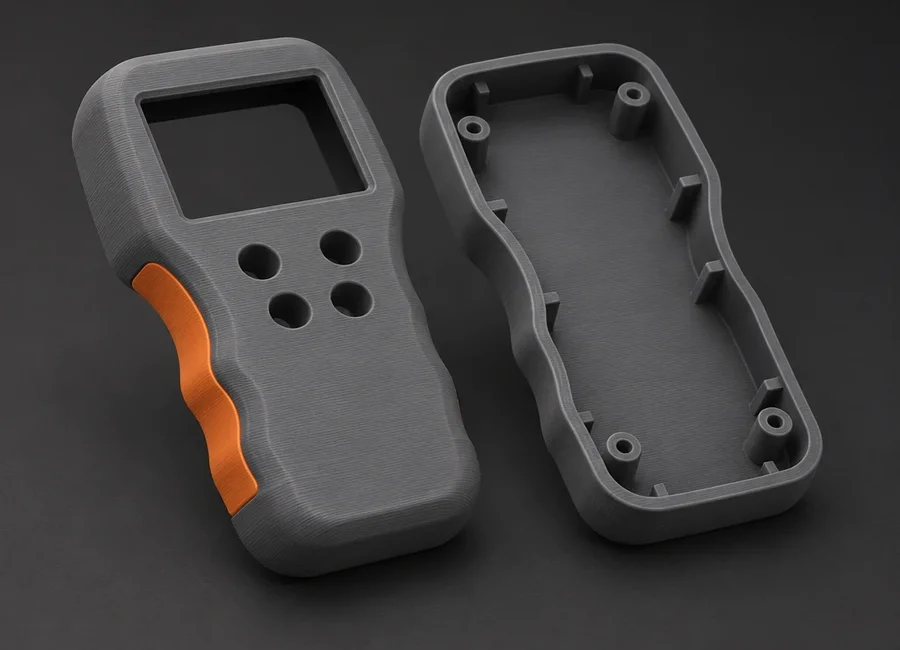
Keep a handheld device on a workshop trolley
A fitted bracket could keep a scanner or similar handheld device within reach on a trolley. Insertion, removal and unintended sideways forces could be assessed in a trial. Its shape must also prevent excessive leverage or thin fastening areas from undermining an otherwise appropriate material choice.
Design · Material grade · Service
Assess ABS for the actual part
What matters when choosing it
ABS may be useful where ordinary PLA is too sensitive to heat or too brittle for handling. Fastenings require particular attention to screw forces, sharp notches and the direction of printed layers. For a replacement part, mating components and installation forces often matter as much as the visible outside dimensions. Show a damaged sample as completely as possible.
Limits and alternatives
For lasting outdoor exposure, ASA is often the more suitable comparison because of its better UV resistance. Large flat ABS parts can warp during printing, so geometry and the manufacturing setup need review before acceptance. Reproducing a sample also offers an opportunity to examine troublesome walls or fastenings. The original shape may not suit every printing process without adjustment.
Sources
Manufacturer information
Manufacturer data refer to specific grades and test conditions. The application images on this page are AI-generated illustrations.
Your next step
Discuss your ABS application
For an ABS review, send a drawing, model or photographs of the sample and its mating parts. Explain handling, fastening and any heating inside the device.