
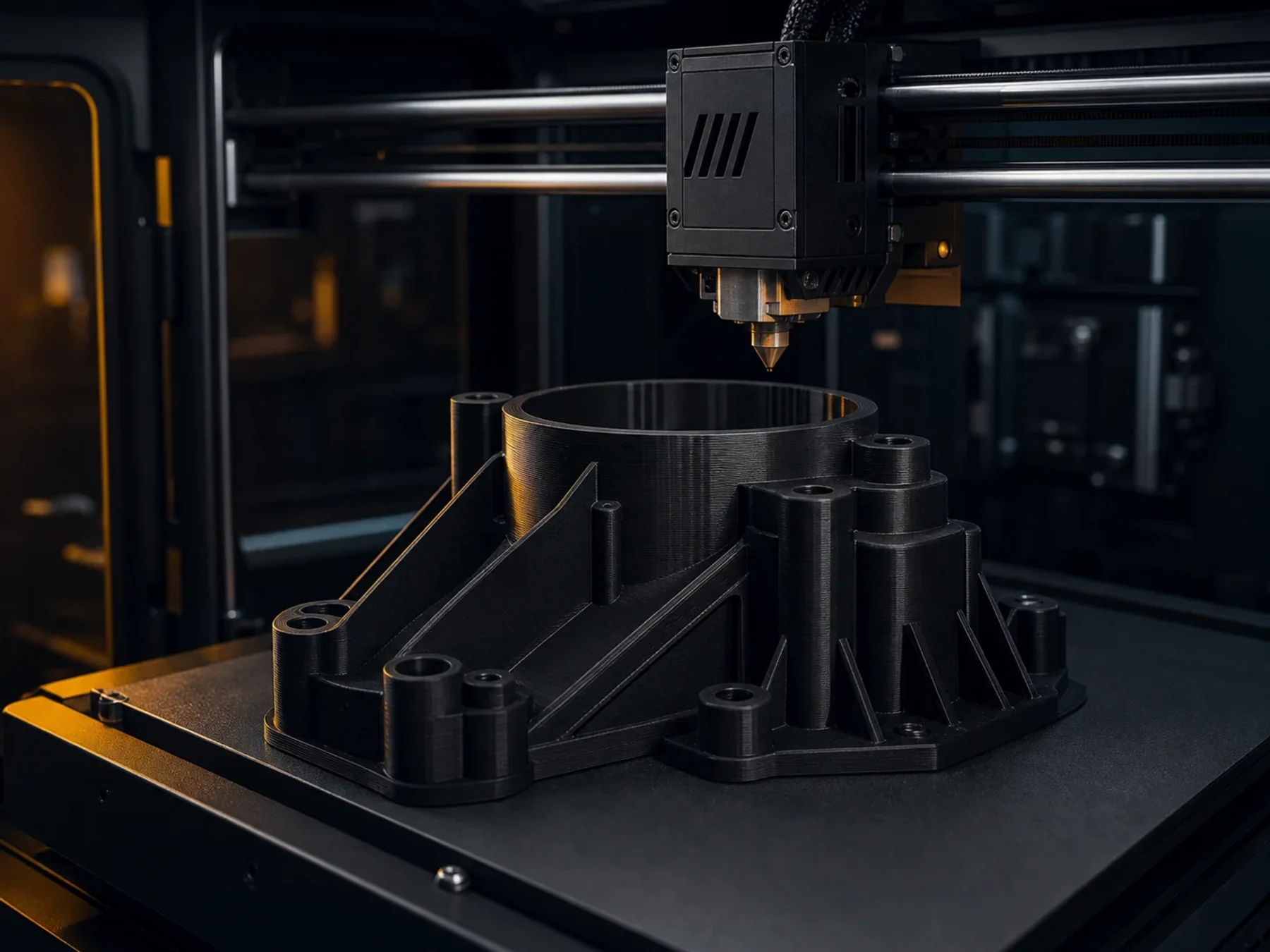
FDM 3D printing in Düsseldorf · One-off parts to small batches
Industrial 3D-printed parts designed for real applications.
Need a functional part, fixture, housing or unavailable replacement part without a long lead time? BEICK manufactures technical polymer components without tooling costs, using your CAD data, drawing or a jointly developed model.
- Feasibility review of STEP, STL and drawing data
- Material selection based on load, temperature and environment
- One-off parts, prototypes and repeatable small batches
- Finishing, threaded inserts and assembly by agreement
Only have a sample or sketch? Contact us. We will identify the information still needed for a reliable manufacturing inquiry.
Discuss your projectFunctional parts · Replacement parts · Fixtures · Small batches
When standard parts do not fit or are no longer available.
FDM 3D printing is particularly useful when parts are customized, needed quickly or required in low volumes for which injection-mold tooling would not be economical.
- Brackets, adapters, covers and housings
- Assembly aids, fixtures and inspection gauges
- Replacement parts for discontinued or modified components
- Functional samples for fit, form and practical testing
- Labeled or color-coded components
- Small batches using agreed, reusable manufacturing parameters
Before quoting, we assess whether FDM is technically and economically appropriate for your part.
Inquire about a project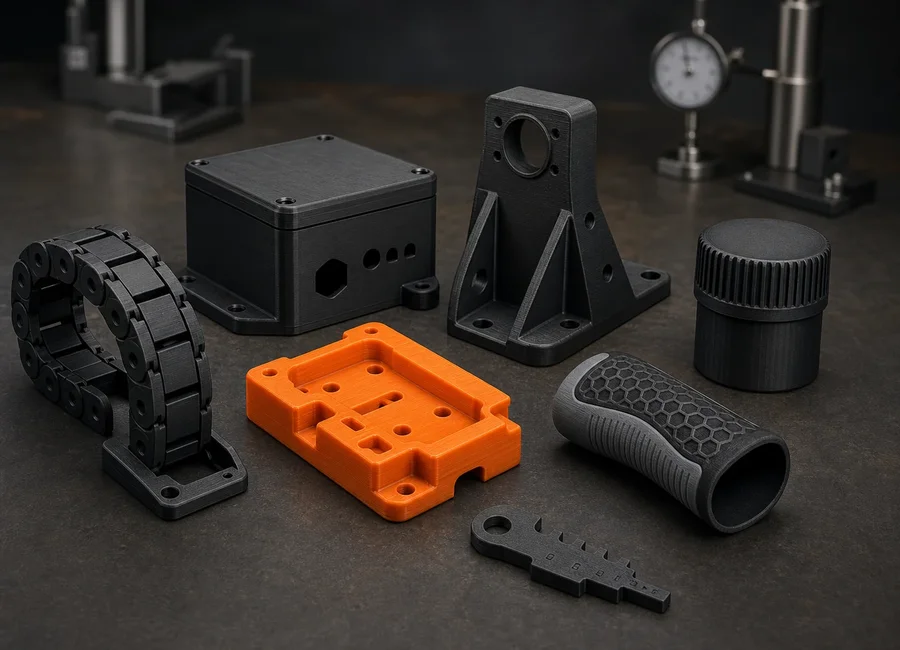
A clear process instead of an anonymous upload platform
From data to a component ready for its intended use.
- Inquiry: Send STEP, STL, a drawing or sketch, plus quantity and intended use.
- Review: We assess geometry, wall thickness, load direction, tolerances and finishing.
- Feedback: You learn whether FDM is suitable, which information is missing and where technical limits or risks exist.
- Coordination: We agree on material, surface, color, critical dimensions and defined inspection features.
- Manufacturing: The component is oriented, prepared and produced with coordinated parameters.
- Finishing: Support removal, drilling, threads, inserts or assembly are completed as agreed.
Approved data, part orientation and manufacturing parameters can be reused for recurring small batches.
Inquire about a project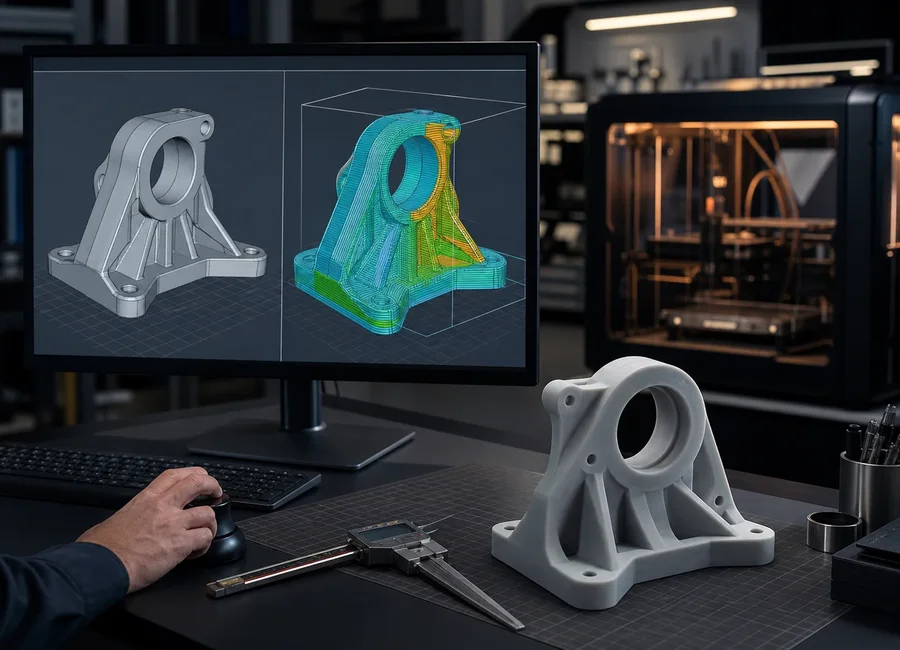
Bambu Lab X1E
X1E – for compact technical components.
The enclosed Bambu Lab X1E provides a 256 × 256 × 256 mm build volume, a maximum nozzle temperature of 320 °C and active chamber control up to 60 °C. Depending on geometry and material, it is suited to technical one-off parts and small batches.
- Brackets, fixtures, adapters and housings
- Standard polymers and selected engineering filaments
- Coordinated material, nozzle and process selection
Usable build size and material suitability are assessed for each part.
Inquire about a project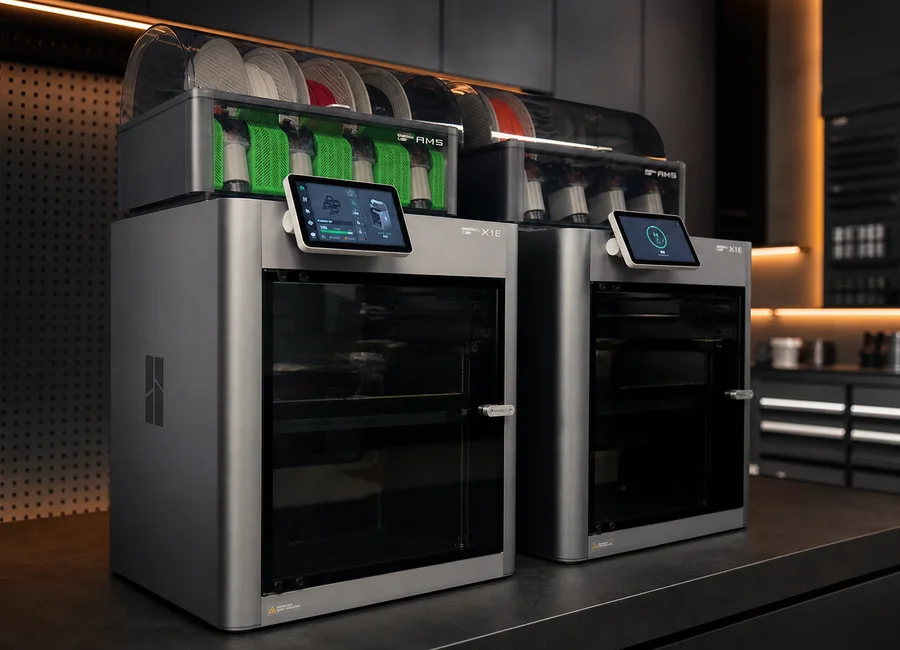
Bambu Lab H2C
H2C – a larger working area and flexible material combinations.
The Bambu Lab H2C extends our capacity for larger components and selected multi-material and multicolor applications. Usable build dimensions vary with nozzle mode; the total working area is up to 330 × 320 × 325 mm. Maximum nozzle temperature is 350 °C, with active chamber heating up to 65 °C.
- Larger housings, covers and assembly aids
- Parts using soluble or separate support material
- Multicolor labels and selected material combinations
Build size, material combination and part orientation are confirmed before manufacturing.
Inquire about a project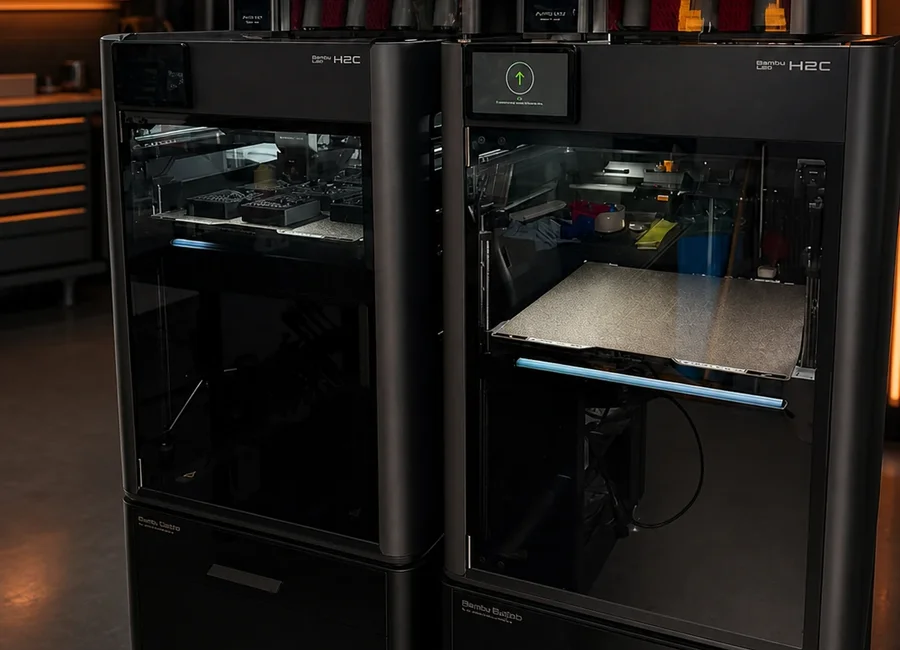
Polymers selected for function, environment and surface
The material follows the application.
We select materials based on the component application, not on the length of a material list.
- PLA / PETG: models, gauges, housings and versatile technical uses
- ABS / ASA: robust components; ASA also for UV and weather exposure
- PA / nylon and PC: selected mechanically or thermally demanding functional parts
- TPU: flexible elements, protective parts and damping
- CF-/GF-reinforced materials: increased stiffness with suitable part geometry
- Support materials: complex geometries and more accessible functional surfaces
Temperature, chemical contact, UV exposure, load case, layer direction and required surface are evaluated before approval. Not every material is suitable for every application or print configuration.
Inquire about a project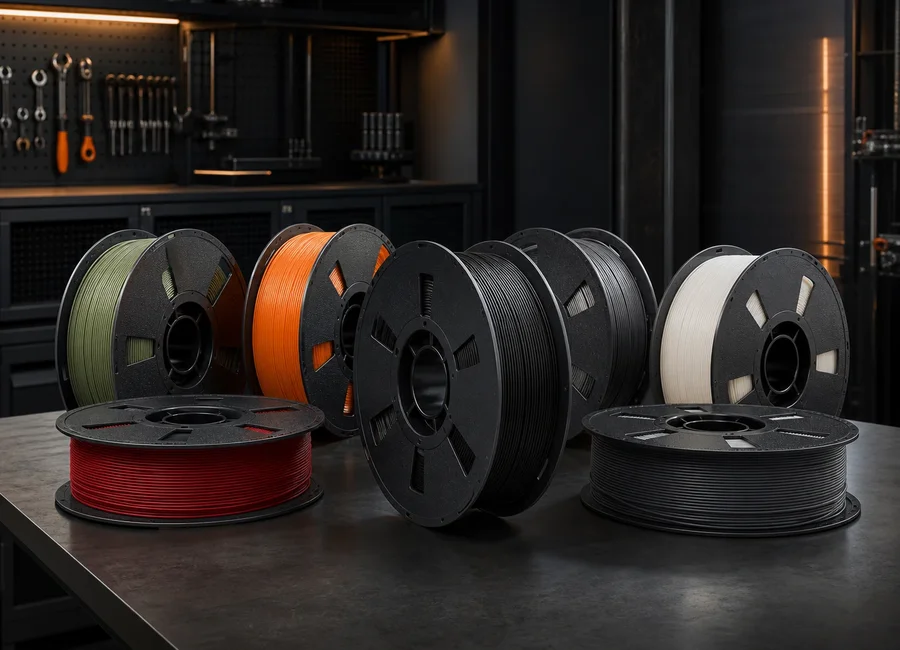
An honest manufacturing decision
When FDM 3D printing is the right choice – and when it is not.
Well suited: customized geometries, replacement parts needed quickly, fixtures, prototypes and low to medium quantities without tooling.
Requires careful assessment: very tight tolerances, continuous high temperatures, safety-critical components, special approvals or high production volumes may require another process or additional testing.
BEICK combines design, 3D printing and conventional manufacturing. We recommend FDM only when it fits the function and required quantity.
Inquire about a project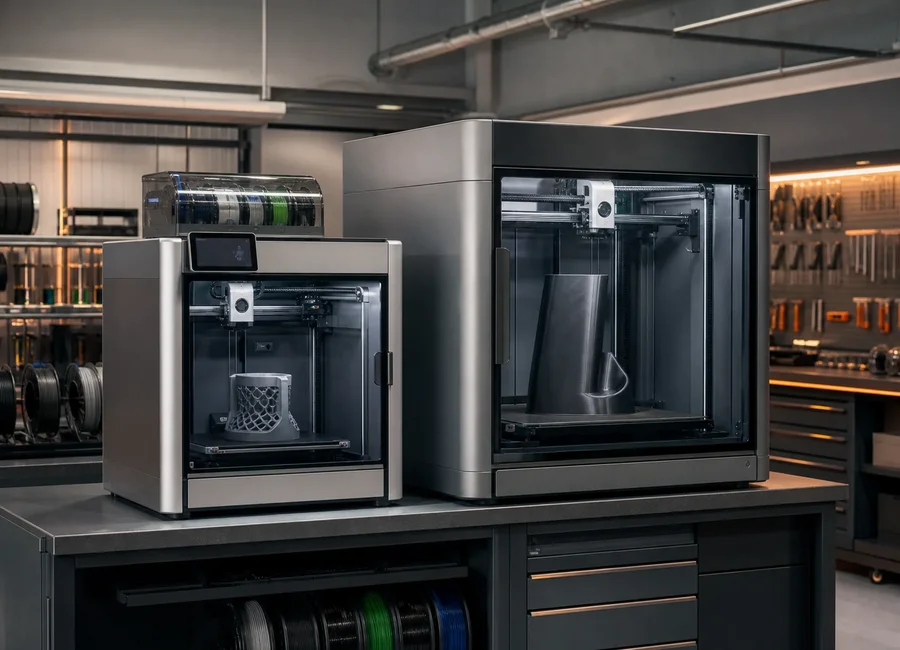
Technical clarity instead of a blind file upload
What you learn before manufacturing begins.
A reliable enquiry is about more than a price. After reviewing your information, we provide a clear technical assessment:
- whether FDM is generally suitable for the component, quantity and intended use
- which data or requirements are still needed for a quotation
- which material group and part orientation may be appropriate
- which functional surfaces, tolerances or finishing steps require agreement
- where identifiable limits exist and when another route may be more suitable
Only then do we coordinate manufacturing scope, quantity and timing on a reliable basis. This avoids producing a printable part that cannot perform its intended task.
Inquire about a projectFiles · Tolerances · Quantities · Repeat production
Common technical questions before an enquiry.
Which file format is most suitable?
STEP data is usually particularly helpful for technical review. STL or 3MF files, drawings, sketches and existing samples can also provide a starting point.
Which tolerances can FDM achieve?
A blanket tolerance claim would be misleading. Feasibility and inspection effort depend on geometry, size, material, print direction and the functional surface. Critical dimensions must be identified before quotation.
Can BEICK produce one-off parts and recurring small batches?
Yes. We manufacture one-off parts, prototypes and coordinated small batches. Whether FDM is economical depends on the component, quantity and finishing required.
Can threads and inserts be included?
Drilling, tapped threads, threaded inserts and other finishing steps can be included following technical coordination.
How is a small batch produced consistently?
After approval, the data set, part orientation, material and coordinated manufacturing parameters can be documented and reused for later batches. Agreed inspection features are defined for each order.
Inquire about a projectRequest a no-obligation manufacturing review
Have your component reviewed.
Send STEP, STL, a drawing or sketch together with quantity, intended use, load and requested date. We assess whether FDM 3D printing is suitable, which information is missing and which technical points must be clarified before a reliable quotation.
You receive a component-specific assessment rather than an automated standard response.
Inquire about a projectFurther information
3D Printing Contract Manufacturing
Outsource FDM 3D printing to BEICK in Düsseldorf. Review CAD data, agree sample requirements and plan repeat batches for technical polymer components.
Inquire about a project