
Material overview · Practical examples · Comparisons
Which 3D printing material fits your part?
A fit-check model, an outdoor housing and a flexible bumper need different material properties. This overview helps you find the relevant material page, with practical examples, illustrations and a comparison with alternatives.
Material family, geometry, print direction and service conditions are considered together. The images illustrate possible applications; they are not photographs of documented BEICK customer projects.
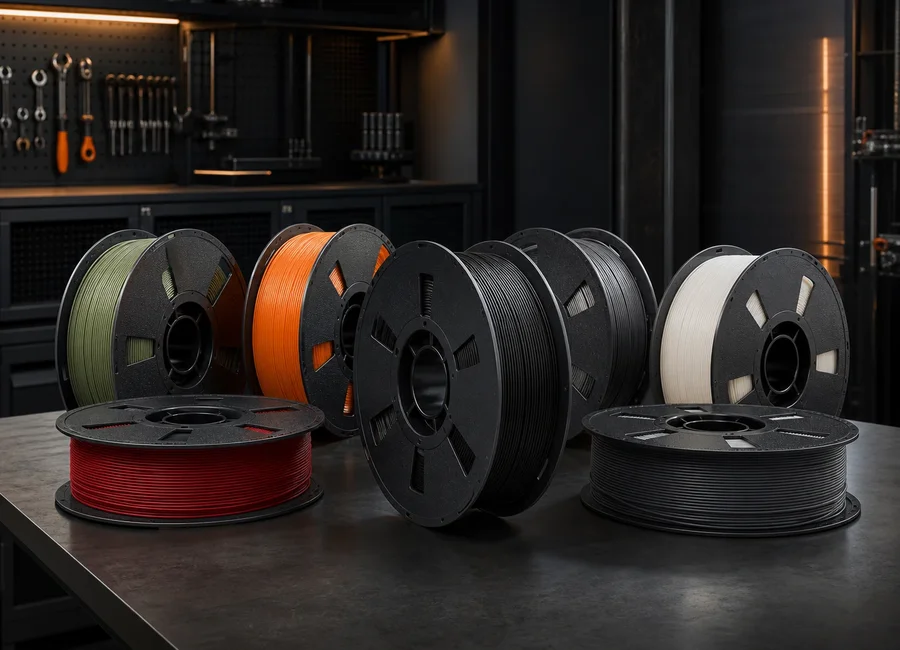
Quick selection
Start with the required function
- Models and fit checks:PLA
- Housings and brackets:PETG, ABS, PC / Polycarbonate
- Outdoor components:ASA
- Flexible parts or moving contact:TPU 95A HF, PA / Nylon
- Stiff fixtures and locating nests:PAHT-CF, PET-CF, GF filaments
- Overhangs and support interfaces:Support materials
Material selection
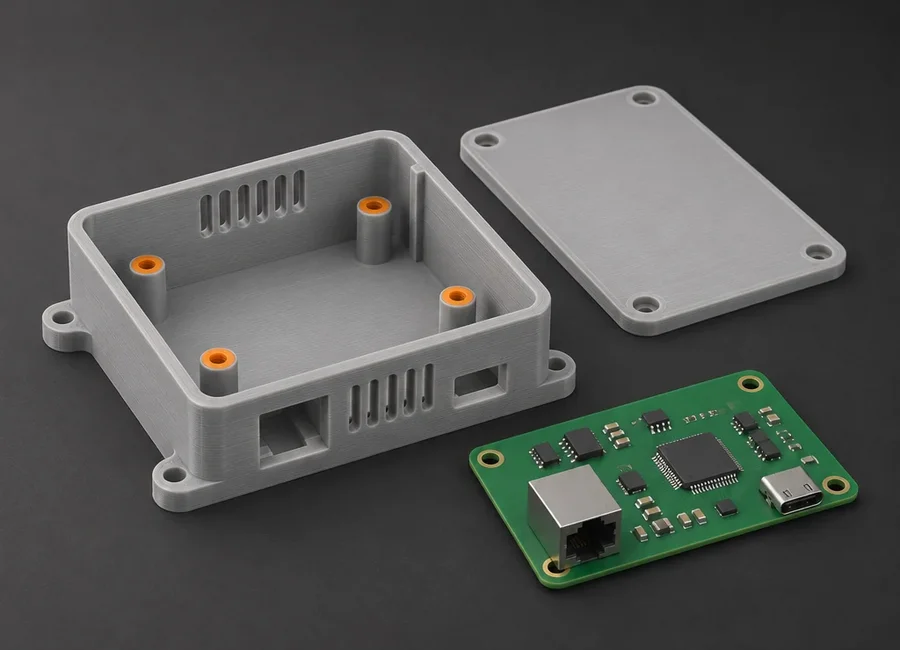
PLA 3D printing: models, fit checks and prototypes
PLA is a rigid plastic for detailed models and quick prototypes. It is especially useful when the first questions concern shape, installation space or handling. A successful fit check does not yet demonstrate suitability for service.
Material selection
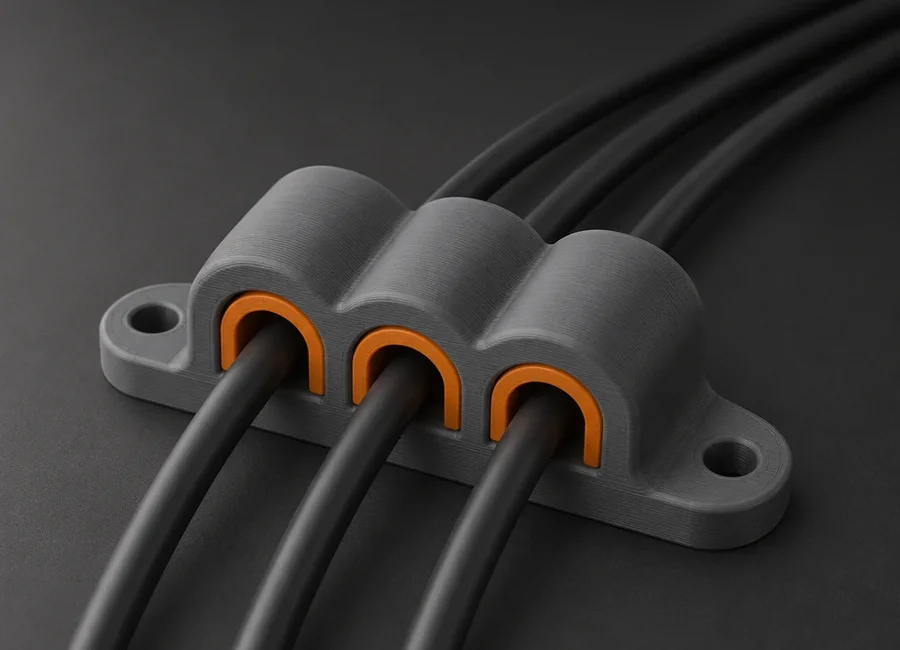
PETG 3D printing: brackets, adapters and housings
PETG combines relatively straightforward processing with toughness. It can deform before breaking more readily than standard PLA. This often makes it a useful candidate for functional parts that are handled or occasionally loaded.
Material selection
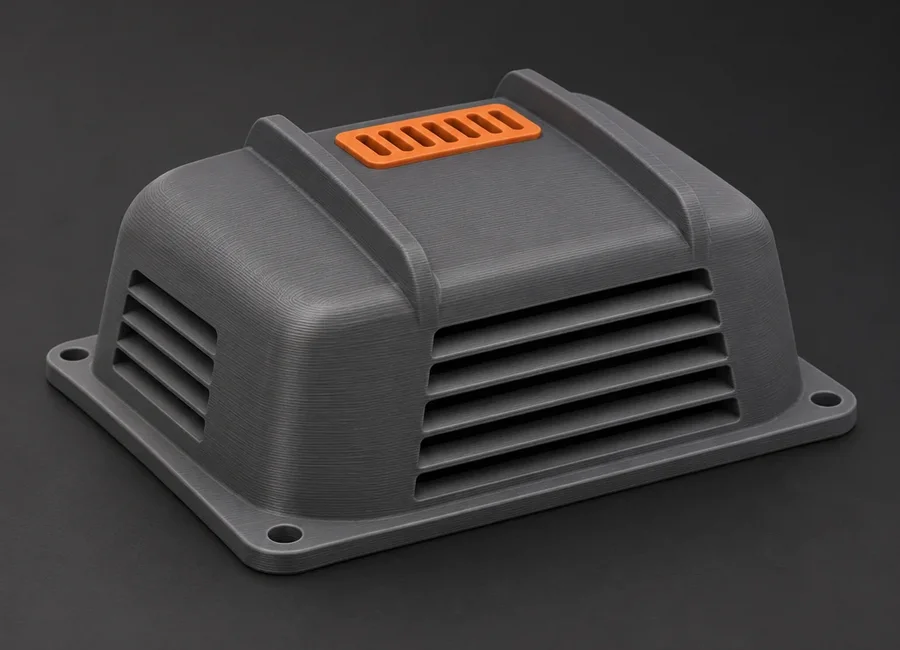
ABS 3D printing: technical parts for indoor use
ABS is an engineering plastic worth considering for tough functional parts and applications involving more heat. Rather than merely checking shape, the focus is on repeated handling, mechanical demands and the surrounding environment.
Material selection
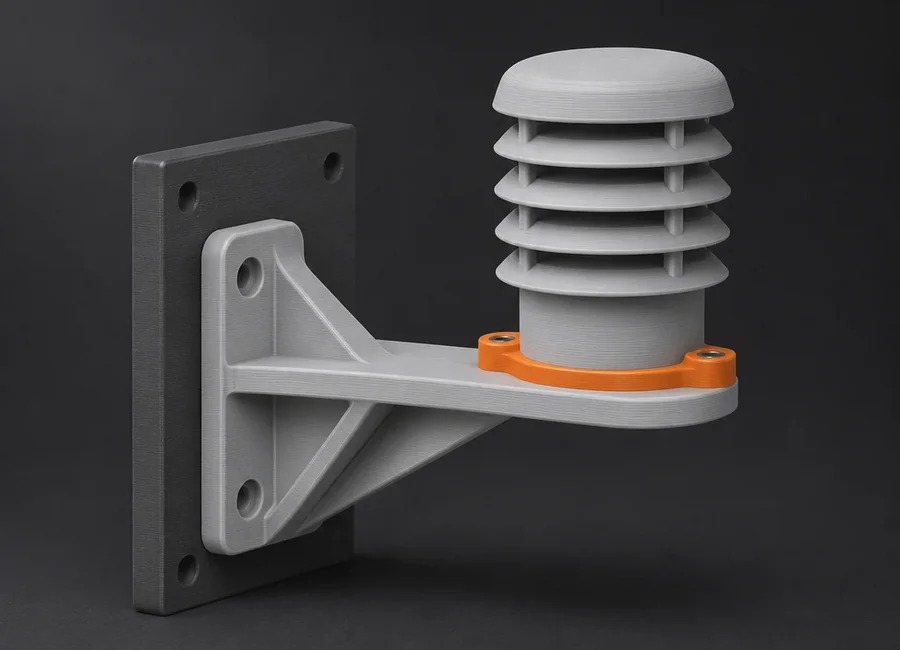
ASA 3D printing: outdoor brackets and housings
ASA is particularly worth considering when a plastic part will remain outdoors. Compared with ABS, it is better equipped to resist UV exposure and weathering. This can help outdoor components retain their function and appearance.
Material selection
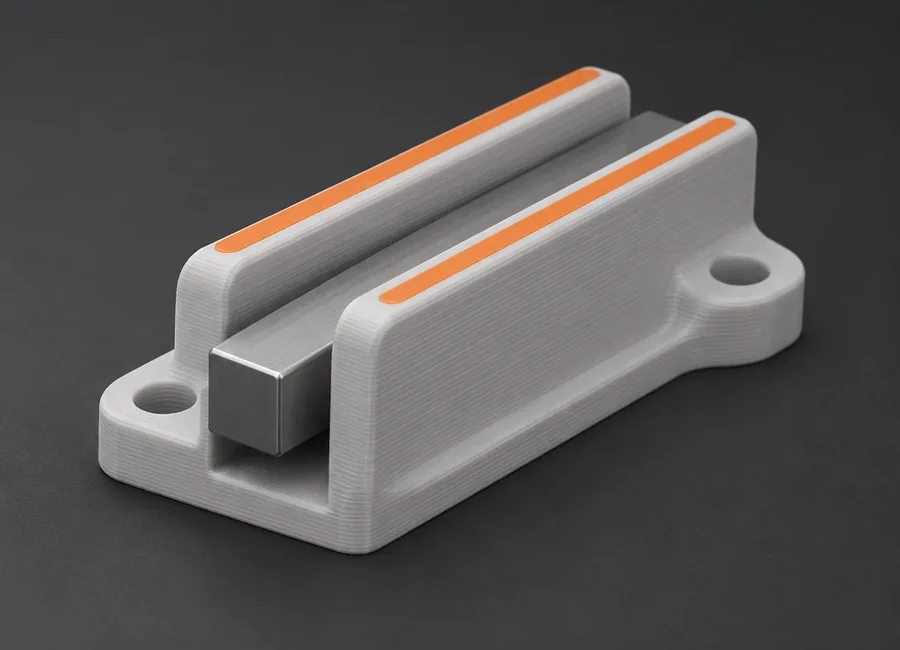
PA and nylon 3D printing: movement and wear
PA means polyamide; nylon is a common name for this family. Unfilled PA grades can be tough, wear-resistant and compliant in thin sections. PA6, PA12 and other formulations do not behave identically.
Material selection
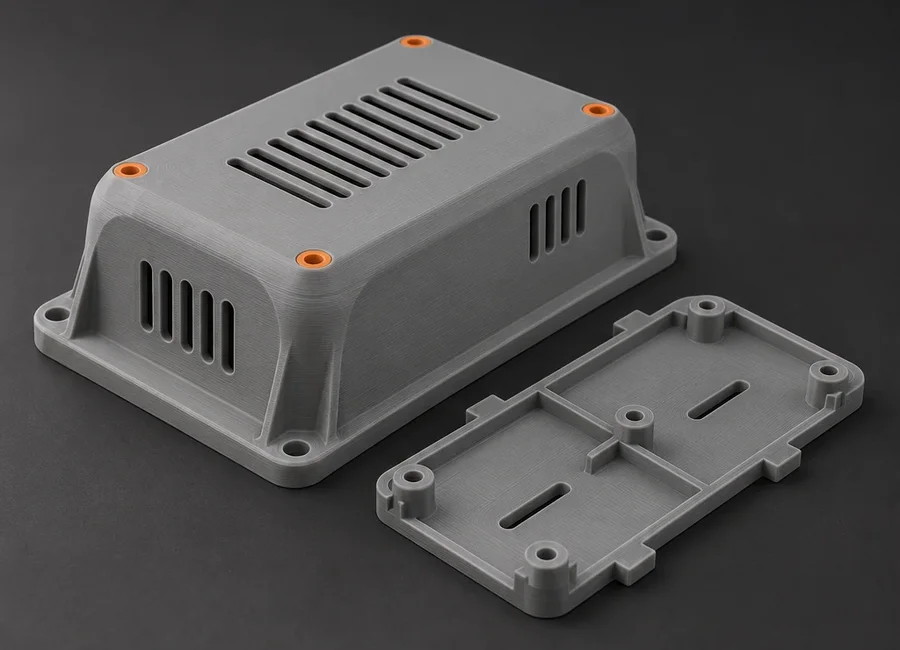
PC 3D printing: heat and mechanical demands
Polycarbonate is an engineering plastic worth considering where heat and mechanical demands occur together. Whether PC is appropriate depends on the filament formulation and the structure of the printed part.
Material selection
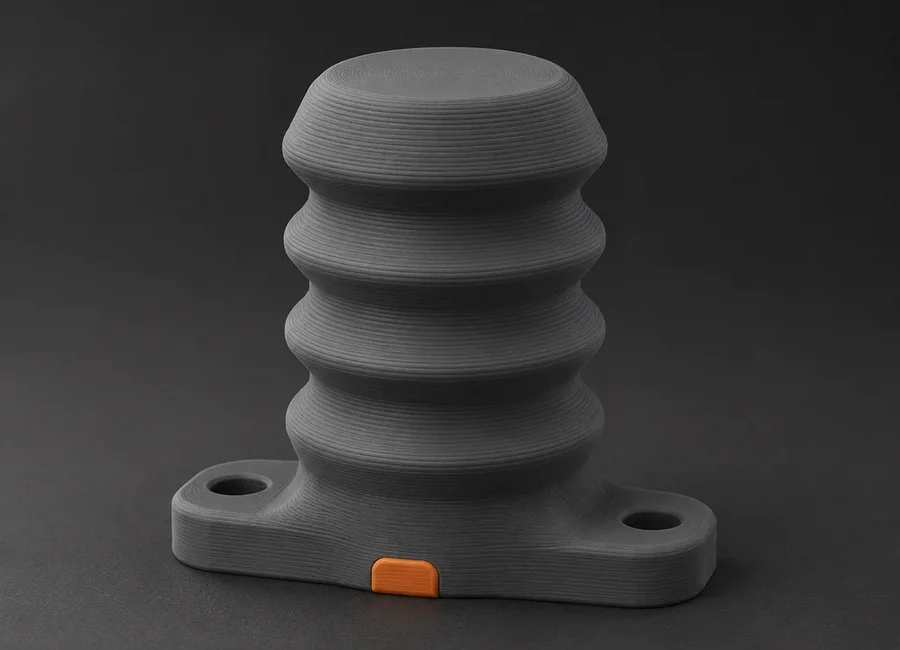
TPU 95A HF 3D printing: bumpers, protection and inserts
TPU is an elastic plastic. The 95A designation describes material hardness on the Shore A scale, rather than how soft a finished part will feel. A solid section behaves differently from a thin wall or an open internal structure.
Material selection
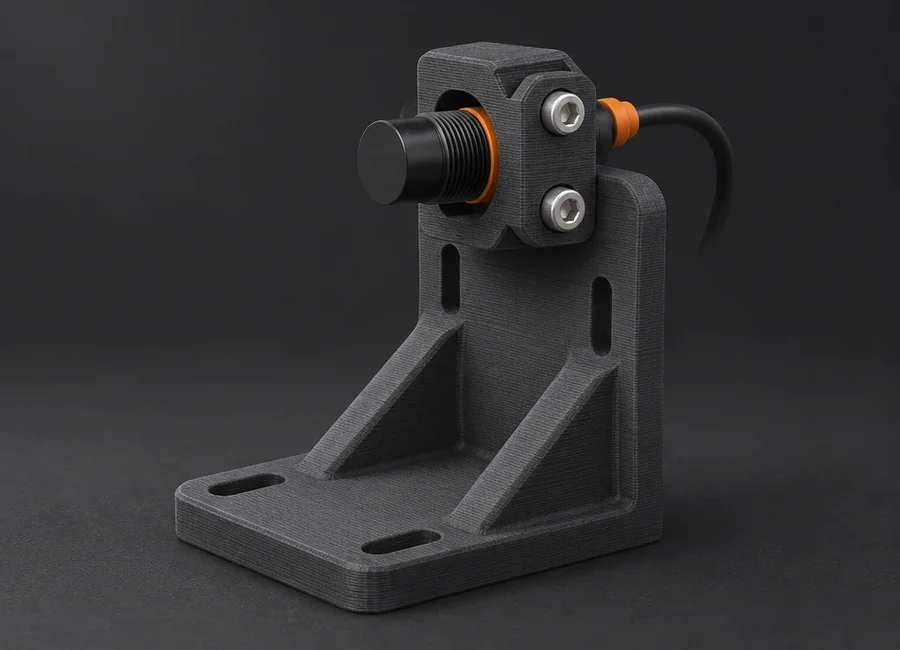
PAHT-CF 3D printing: stiff fixtures and brackets
PAHT-CF combines a nylon base with short carbon fibers. It is worth considering when a fixture must remain stiff and heat and moisture also influence material selection. Carbon fibers do not make it an unrestricted replacement for metal.
Material selection
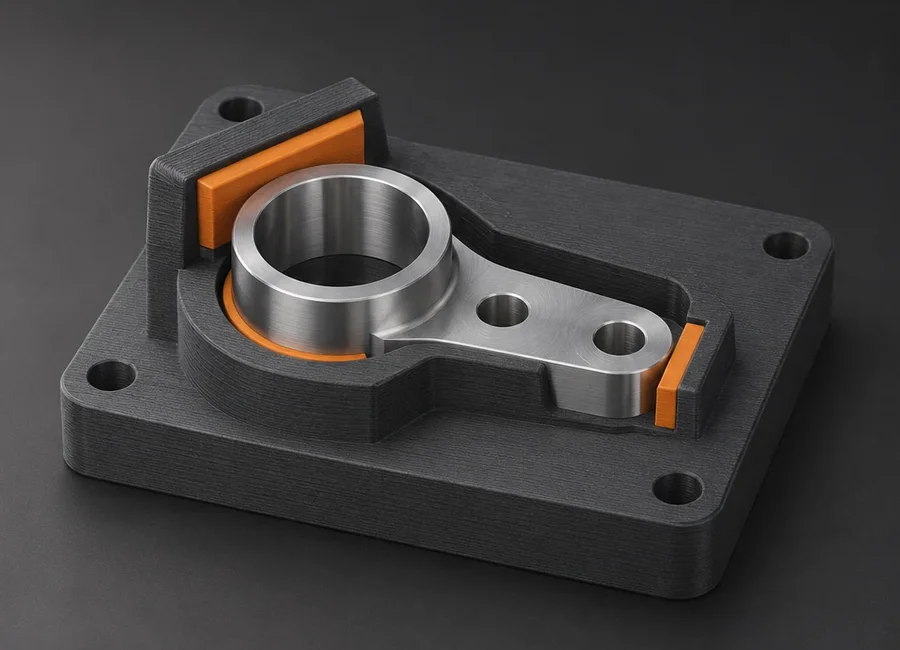
PET-CF 3D printing: stable nests and gauges
PET-CF is carbon-reinforced PET, a different material from PETG-CF. It is particularly worth considering when a stiff part must retain its shape and changes in ambient humidity complicate selection. Required dimensions and acceptable deformation still need to be specified.
Material selection
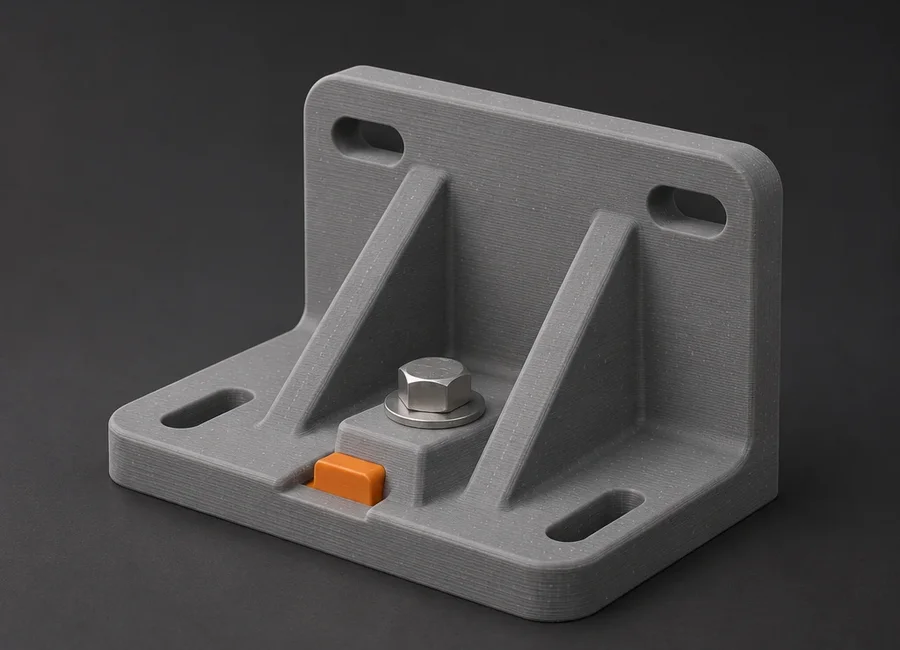
Glass-fiber-reinforced filaments in 3D printing
GF means glass-fiber reinforcement, rather than a separate plastic. PA6-GF, for example, combines polyamide and glass fibers; ABS-GF has a different base. Heat, moisture and toughness information cannot simply be transferred between all GF grades.
Material selection
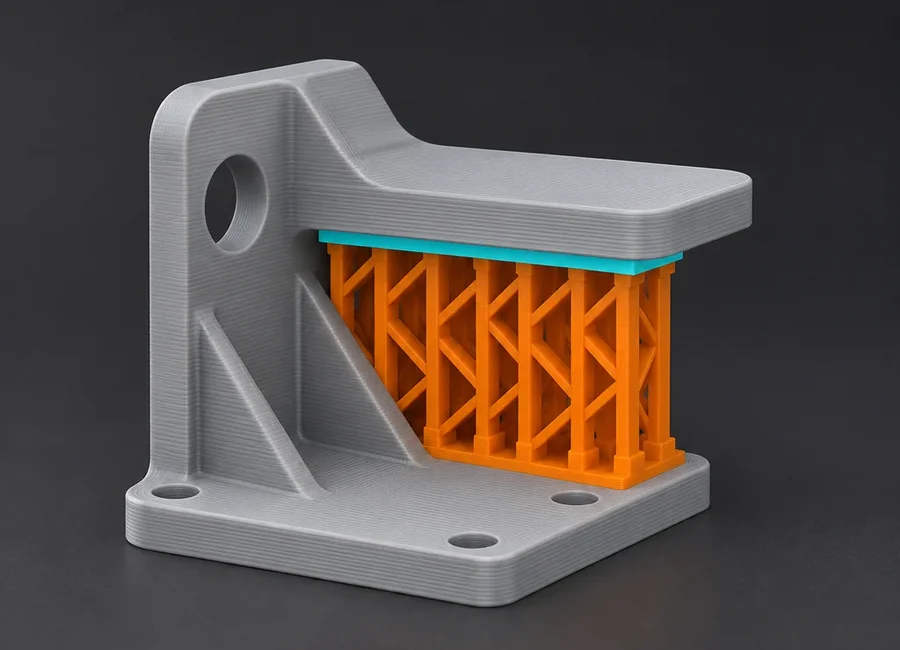
Support material in 3D printing: overhangs and internal areas
Supports carry overhangs and difficult areas during printing and usually do not remain in the finished part. A separate interface material can make removal easier. A water-soluble material such as PVA works differently and is washed out after printing.
Geometry · Loads · Environment
What we need for your material choice
Tell us the part function, load direction, sustained and peak temperatures, exposure to sunlight, moisture or specific substances, and critical dimensions. A sample may be useful before a recurring order.
FDM parts have a layer structure. A stiffer filament is not automatically tougher or stronger between layers, and a manufacturer test value is not a blanket approval for a finished component.
Direct contact
Discuss the material for your part
Send your drawing or CAD model, quantity and a description of how the part will be used. We review material options and agree the next useful step.