
FDM material · Applications · Alternatives
PET-CF 3D printing: stable nests and gauges
PET-CF is carbon-reinforced PET, a different material from PETG-CF. It is particularly worth considering when a stiff part must retain its shape and changes in ambient humidity complicate selection. Required dimensions and acceptable deformation still need to be specified. This does not mean every demanding part requires PET-CF. The question is whether limited deflection and clearly defined positioning provide a useful benefit in the application.
Possible application 1
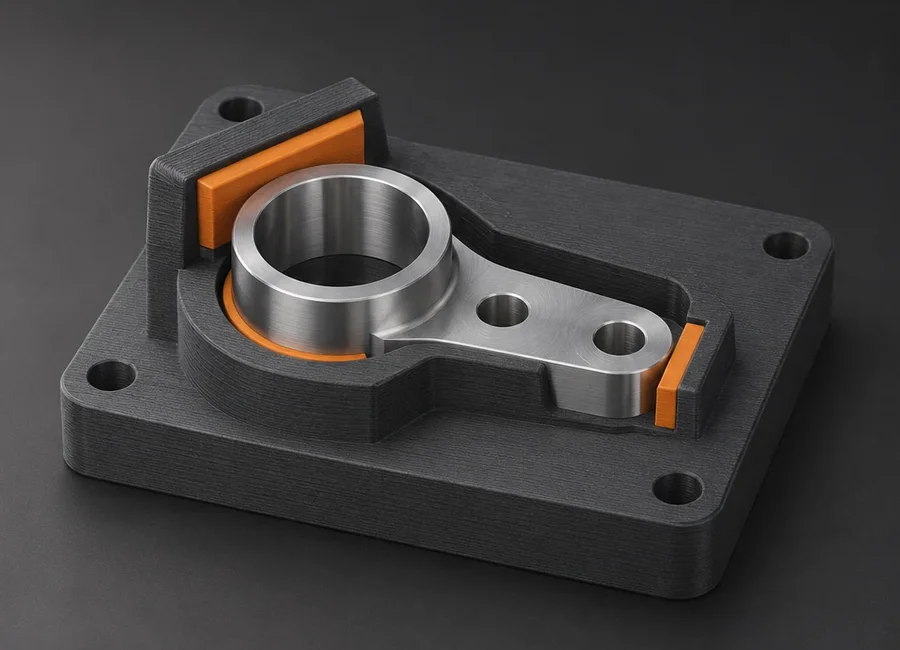
Locate a workpiece for repeated inspection
A nest could position a workpiece on defined surfaces for recurring inspection. PET-CF would be a material to consider where the nest should yield as little as possible. A prototype would be checked for contact, insertion direction and removal so the workpiece reaches its intended inspection position.
Possible application 2
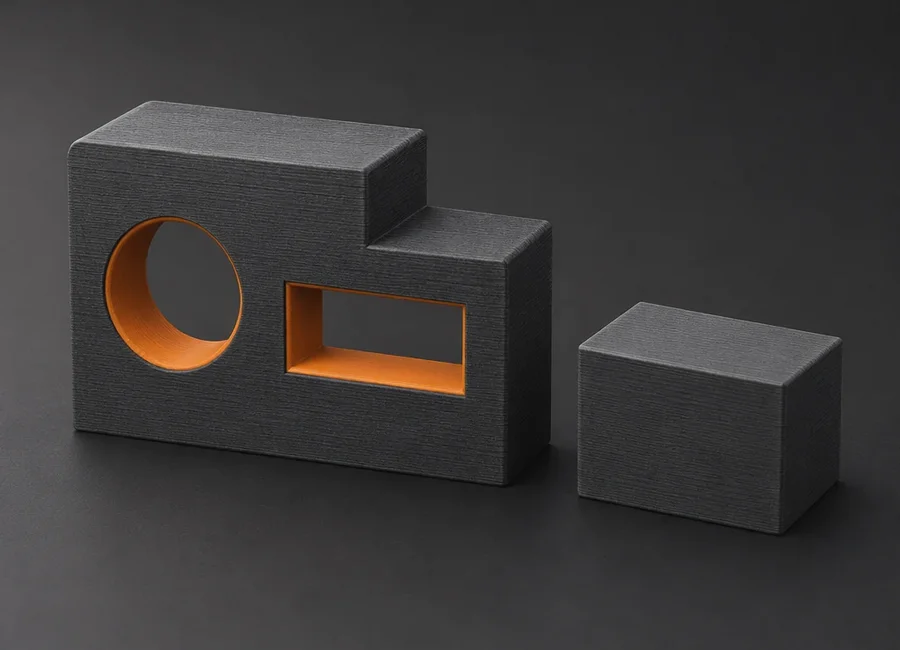
Compare a distance using a fitted gauge
A gauge could make an agreed gap or position visible during assembly. A PET-CF version would need to be matched to the dimensions required and the actual contact method. Whether it serves its inspection purpose would be assessed through defined features and the chosen inspection procedure.
Compare the function
PET-CF or PAHT-CF for a nest?
PET-CF can be considered for a nest requiring dimensional stability; PAHT-CF offers a different combination of nylon and carbon fibers. Where impacts, insertion forces or varying humidity matter, high stiffness alone is insufficient. The comparison should reflect real component loads rather than simply placing manufacturer specimen values side by side.
Prepare a bracket for a more humid location
A technical bracket could be used in an area with changing ambient humidity. A possible PET-CF version would require details of fastenings, acceptable movement and surrounding substances. An initial trial could then establish whether the material and geometry deserve further consideration for that particular task.
Design · Material grade · Service
Assess PET-CF for the actual part
What matters when choosing it
Low moisture uptake and high stiffness can be useful for these tasks. Careful drying before printing remains necessary: low water absorption of the finished material does not mean damp filament can be processed without consequences. Gauges need defined inspection features and a defined method of use. A precisely shaped object alone does not establish a dependable inspection operation.
Limits and alternatives
PET-CF is not the best choice for every impact or bending demand. Loads across printed layers and chemical exposure require particular review. Manufacturer specimen data cannot replace testing of the intended component. PET-CF and PETG also differ in manufacturing requirements. An existing PETG design is therefore reviewed for walls and fastening details before changing material.
Sources
Manufacturer information
Manufacturer data refer to specific grades and test conditions. The application images on this page are AI-generated illustrations.
Your next step
Discuss your PET-CF application
Send workpiece or mating-part geometry and identify inspection features, contact surfaces and loads. For recurring parts, specify the intended data revision and inspection requirements.