
FDM material · Applications · Alternatives
PETG 3D printing: brackets, adapters and housings
PETG combines relatively straightforward processing with toughness. It can deform before breaking more readily than standard PLA. This often makes it a useful candidate for functional parts that are handled or occasionally loaded. A suitable application depends on the relationship between geometry and loading. It helps to explain what happens to the part in everyday use and how it will be fastened.
Possible application 1
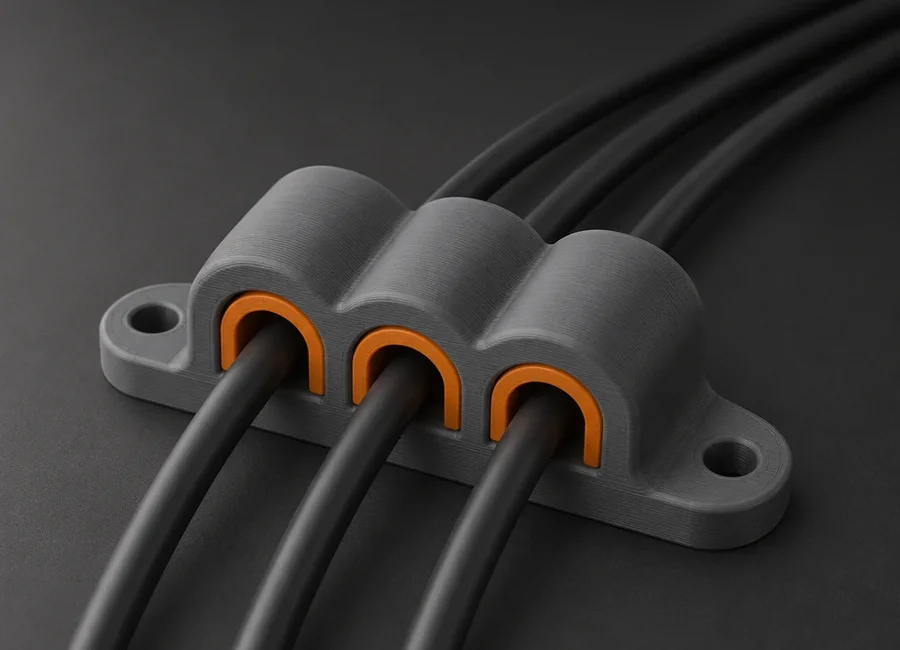
Organize cables at a workstation
A cable bracket could guide several leads along a workbench. The cables should remain accessible without being forced around unnecessarily sharp corners. Cable diameters, fastening points and expected movement would be recorded first, so the bracket supports the way people work instead of becoming an obstruction.
Possible application 2
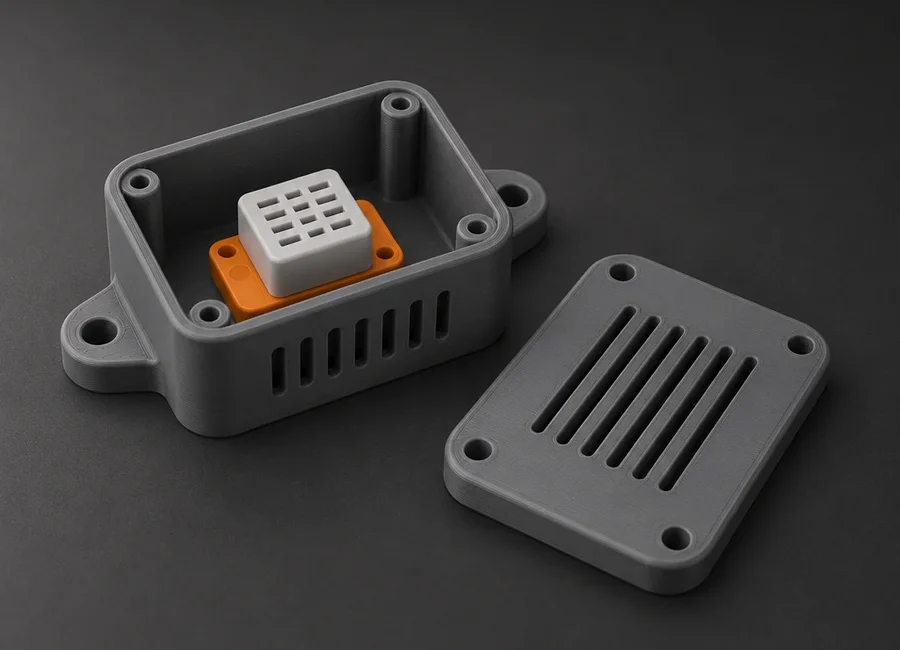
Adapt a housing for a measurement setup
A custom housing could accommodate switches, connectors and a small electronic assembly. PETG would be assessed if the housing is handled frequently. A prototype could establish lid fit, fastener positions and connection access before the final configuration is agreed.
Compare the function
PETG or TPU for a cable bracket?
PETG can be assessed when the guide should largely retain its shape with a little compliance. If contact must be deliberately soft or allow substantial movement, TPU or a separate TPU insert may be more appropriate. Describing the desired movement is therefore more useful than simply requesting a flexible plastic.
Adjust a sensor position
An existing sensor may sit too close to an edge for a new task. A lightweight PETG adapter could reposition it without rebuilding the entire bracket. Available space, sensor weight and possible movement or forces at the screw locations would determine the design review.
Design · Material grade · Service
Assess PETG for the actual part
What matters when choosing it
PETG may be appropriate when some compliance is helpful and PLA appears too brittle. Wall thickness, screw locations and the length of time under load matter alongside the filament grade. Load information should distinguish brief forces during insertion from forces that remain on the component for hours or days.
Limits and alternatives
PETG is not a soft rubber or an automatic solution for continuously highly loaded clamps. For substantial heat, prolonged sunlight or aggressive cleaners, we compare suitable alternatives and assess the actual service conditions. A bracket can work during its first insertion and still change under prolonged loading. For repeated use, the relevant operation is therefore considered on a prototype.
Sources
Manufacturer information
Manufacturer data refer to specific grades and test conditions. The application images on this page are AI-generated illustrations.
Your next step
Discuss your PETG application
For a PETG enquiry, provide installation photographs, dimensions of the parts being held and details of fastening and handling. Include any heat sources or cleaning products.