
FDM material · Applications · Alternatives
PLA 3D printing: models, fit checks and prototypes
PLA is a rigid plastic for detailed models and quick prototypes. It is especially useful when the first questions concern shape, installation space or handling. A successful fit check does not yet demonstrate suitability for service. Early in development, this can make unresolved questions tangible. The examples below describe possible checks that can be useful before selecting the material for a later production part.
Possible application 1
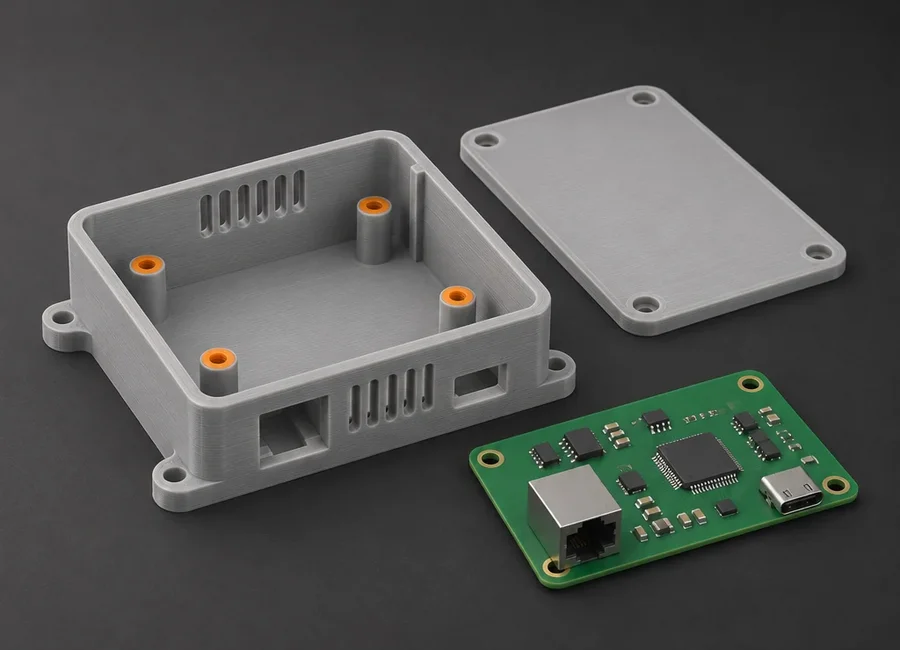
Check a housing before manufacturing
A new housing must fit into an existing space. A PLA model could show whether screws remain accessible, connectors have enough clearance and the lid can be opened. Changes would first be made to the data, before producing a later service part in the appropriate material.
Possible application 2
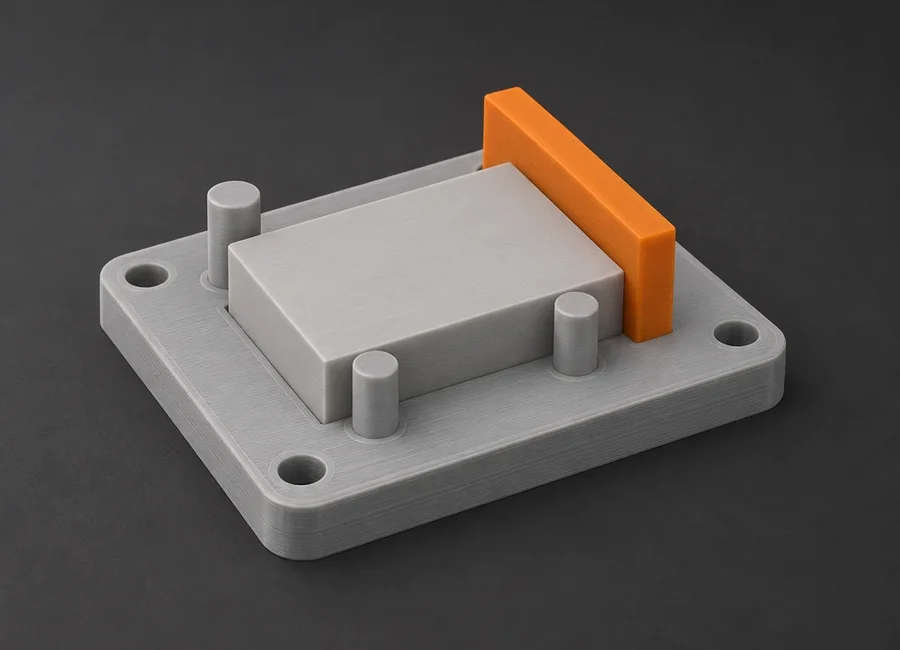
Make assembly positions visible
In a simple assembly operation, parts must repeatedly be placed in the same location. A lightly loaded PLA gauge could indicate contours and positions. A trial could establish whether the operator can reach the workpiece easily and whether the proposed shape actually improves the operation.
Compare the function
PLA or PETG for a housing?
PLA may be sufficient for a fit check, where geometry is the immediate concern. If the housing will later be handled regularly or experience minor impacts, PETG can be assessed as an alternative. Use and environment determine the choice: a perfectly fitting PLA model does not settle the material for the service part.
Compare alternative designs
Two handle or cover designs may look similar on screen but feel different in use. PLA models could enable a direct comparison of access, visibility of markings and room for gripping. The remaining requirements for the finished component would then be defined using what the trial revealed.
Design · Material grade · Service
Assess PLA for the actual part
What matters when choosing it
PLA is often an economical starting point when detail and fast feedback matter more than demanding service performance. Colors can identify different design versions or assembly positions. A useful fit prototype should include the connections, fastenings and clearances that matter later. Otherwise, it may answer the wrong questions.
Limits and alternatives
Standard PLA is usually a poor first choice for hot locations, lasting outdoor exposure, strong impacts or continuously loaded brackets. Thin clips may fracture rather than flex; PETG, PA or a different design may be more appropriate. Keep evaluation of shape separate from evaluation of loading. This avoids unintentionally turning a successful demonstration model into an untested service component.
Sources
Manufacturer information
Manufacturer data refer to specific grades and test conditions. The application images on this page are AI-generated illustrations.
Your next step
Discuss your PLA application
Send the model file or drawing and explain what the prototype should establish. Include the intended mating parts and the questions still open before the next development stage.